
New construction in Georgia: prices, trends, guides & homes as of December 2025

About Georgia
Known by many as the Peach State, Georgia shines bright in the heart of the South. It's the 8th largest state, with about 10.9 million residents, according to the U.S. Census Bureau's 2022 report. Busy with activity, Atlanta is the state's largest city and home to over six million people. Georgia's strong economy is powered by 19 Fortune 500 companies, including household names like Delta Airlines, Home Depot, United Parcel Service (UPS), and The Coca-Cola Company. These industry giants create many jobs and help keep Georgia's unemployment rate below the national average. In fact, in April 2023, it was just 3.1%, according to the Bureau of Labor Statistics. What's more, Georgia is a land of opportunity, offering a wide range of careers across different industries, including film and entertainment, agriculture, technology, and healthcare.
How are new home prices changing in Georgia?
Home price data reflects current listings in Georgia, sourced from Jome and updated regularly
*Based on Jome markets

Chat with Georgia Expert
Get a free, no-pressure consultation with our top Georgia new-construction expert. They know every major builder, the best deals and incentives, and exactly what's happening in the local new-construction market.
Georgia market overview
- Overall inventory10,147
- Single-family inventory8,363
- Townhouse inventory1,631
- Condo inventory111
- Multi-family inventory19
- Penthouse inventory0
- 1 bed inventory41
- 2 beds inventory352
- 3 beds inventory3,376
- 4+ beds inventory6,364
- Median home price$469,990
- Median sqft price$203.69
- Median 1 bed price$314,247
- Median 2 beds price$449,000
- Median 3 beds price$379,407
- Median 4+ beds price$539,900
- Min listing price$134,900
- Max listing price$13,850,000
- Min community price$179,888
- Max community price$5,945,000
Georgia median price change
| Month | Median price | Change |
|---|---|---|
| December 2025 | $469,952 | - |
Georgia real estate markets

What it's like to live in Georgia?
Georgia functions as the economic engine of the Deep South, with Atlanta serving as a corporate headquarters magnet, transportation hub, and emerging entertainment production center. The metro sprawls across multiple counties, each with distinct character and price points. Beyond Atlanta, the state divides into regions with separate identities. Savannah operates as a port city and tourist destination. Columbus anchors military employment around Fort Benning. Augusta combines medical and cybersecurity sectors. Smaller metros serve manufacturing and distribution. The common thread is Georgia's business-friendly environment, central location for East Coast logistics, and cost structure that remains competitive despite Atlanta's rapid appreciation. The state has evolved from its agricultural past into a diversified economy attracting corporate relocations, film production, and sustained population growth that shows no signs of slowing.
Why Georgia attracts corporate America and everyone else
The economic case centers on Atlanta's emergence as America's corporate relocation destination. Home Depot's 1.6-million square foot headquarters in west-Midtown Atlanta anchors a retail giant employing thousands in the metro. State Farm's large office campus in Dunwoody supports thousands more with the corporate stability and benefits that insurance companies provide. Delta Air Lines operates its global headquarters and largest hub at Hartsfield-Jackson Atlanta International Airport, the world's busiest, creating massive direct employment plus ripple effects across hospitality, logistics, and professional services. UPS maintains significant operations. Coca-Cola's iconic headquarters building remains a metro landmark. The list of Fortune 500 companies with Atlanta headquarters or major operations extends well beyond these examples, creating a corporate employment density matched by few metros outside New York, Chicago, and Dallas.
The film and entertainment industry has transformed Georgia into a production powerhouse rivaling California. Trilith Film Studios near Fayetteville spans 700 acres, creating major productions and an entire creative community ecosystem around the facility. Marvel films, major television series, and countless commercials shoot throughout the metro, attracted by Georgia's aggressive tax incentives and production infrastructure that has matured substantially over the past 15 years. This industry employs not just actors and directors but an army of production assistants, set builders, costume designers, location scouts, post-production editors, and support staff earning middle-class incomes while working in entertainment.
Logistics and distribution operations leverage Georgia's central East Coast location and transportation infrastructure. Savannah's port ranks among the nation's busiest container facilities, processing imports from Asia and exports to global markets. The resulting warehousing and distribution network throughout the state creates constant demand for supply chain professionals, warehouse managers, and transportation coordinators. Hartsfield-Jackson's position as a major cargo hub adds another logistics dimension.
Military installations provide employment stability. Fort Benning in Columbus employs thousands of active-duty soldiers plus civilian contractors and support personnel. Fort Stewart near Savannah serves similar functions. These installations create housing demand in specific markets and contribute economic stability regardless of broader market conditions.
The tax structure sits in the middle ground. Georgia charges state income tax with a top rate of 5.75%, higher than Florida or Tennessee's zero but lower than many northeastern states. Property taxes remain moderate, with effective rates typically between 0.80% and 1.10% of assessed value depending on county and municipality. The combined burden lands meaningfully below high-tax states while remaining competitive with southeastern alternatives.
The cost of living varies dramatically by proximity to Atlanta. Inner metro counties like Fulton and DeKalb have experienced substantial appreciation, with quality new construction often exceeding $500,000. Outer suburbs in Cherokee, Forsyth, and Gwinnett Counties offer better value from $350,000 to $480,000 for solid properties. Counties well outside the immediate metro including Henry, Paulding, and Bartow provide the best affordability, though commutes stretch beyond 45 minutes. Builders have responded to sustained growth by developing numerous communities across this range, creating inventory choices that didn't exist even a decade ago.
The climate delivers hot, humid summers and mild winters. Temperatures regularly reach the low 90s from June through September with high humidity that makes outdoor activities uncomfortable during peak afternoon hours. Winters rarely see sustained freezing, though occasional ice storms can disrupt infrastructure when they occur. Spring and fall provide genuinely pleasant weather. Severe weather including tornadoes affects the state, though frequency remains lower than the Great Plains or Deep South states like Alabama and Mississippi.
Understanding Georgia's markets by buyer type
Georgia's economic diversity and Atlanta's sprawling geography serve distinct buyer profiles, with new construction concentrating in areas matching specific employment patterns, commute considerations, and lifestyle priorities.
For Corporate Executives and White-Collar Professionals: Atlanta's corporate headquarters concentration creates massive demand from executives, managers, analysts, and professional services workers. These buyers seek proximity to office parks in Midtown, Buckhead, Cumberland, Perimeter Center, and other employment nodes while prioritizing strong school districts and established neighborhoods. New construction in North Fulton, Forsyth County, and Gwinnett County serves this demographic heavily, offering commutes ranging from 25 to 45 minutes depending on traffic patterns and specific job locations. Price points typically range from $450,000 to $850,000, with buyers prioritizing builder reputation, floor plan flexibility, and access to top-rated schools that protect resale value. Home Depot employees often concentrate in northwest suburbs near the company's headquarters location. State Farm's Dunwoody office creates demand in that immediate area plus surrounding communities offering reasonable commutes. Delta employees scatter throughout the metro but concentrate in south metro areas closer to the airport. These corporate professionals often relocate from other metros and bring housing budget expectations from their previous markets, supporting Atlanta's price appreciation even as locals complain about affordability.
For Film and Entertainment Industry Workers: Georgia's production boom has created a buyer segment that didn't exist 20 years ago. Production assistants, set designers, camera operators, location scouts, and post-production specialists working at Trilith Studios and throughout the metro seek housing balancing affordability with proximity to production zones. South metro areas including Fayetteville, Peachtree City, and Newnan serve workers at Trilith specifically, with new construction from $310,000 to $480,000 providing reasonable commutes to the studio complex. Industry workers shooting in the metro proper often seek intown locations in areas like East Atlanta, Decatur, and emerging neighborhoods where rental options dominate but some new townhome construction exists. The industry's project-based employment creates unique considerations, with workers sometimes earning substantial income during active productions followed by slower periods. Some maintain side businesses or freelance work between projects, making home offices and flexible spaces valuable features.
For Logistics and Supply Chain Professionals: Georgia's position as a distribution hub creates demand from warehouse managers, transportation coordinators, supply chain analysts, and port operations workers. Savannah's port operations drive housing demand throughout that metro, with new construction from $290,000 to $430,000 serving workers at various income levels. Atlanta's extensive distribution network creates similar patterns, with buyers seeking proximity to major warehouse concentrations along I-85 north toward Gwinnett County, I-20 west toward Douglas County, and I-75 south toward Henry County. These professionals prioritize short commutes and maximum square footage per dollar over luxury finishes or cultural amenities. New construction serving this market emphasizes practical layouts with three-car garages, durable finishes, and larger lots. Price points range from $320,000 to $480,000, with the best values found in counties farther from Atlanta's core where land costs remain workable.
For Military Families and Defense Contractors: Fort Benning in Columbus creates concentrated demand from active-duty Army personnel, military retirees, and defense contractors supporting base operations. Columbus's housing market operates independently from Atlanta, with new construction from $260,000 to $400,000 serving military families at various ranks. Junior enlisted personnel often rent, while senior NCOs and officers purchase homes using VA loans with zero down payment requirements. The Army's Ranger School and Infantry School at Fort Benning create a professional military culture throughout Columbus. These buyers prioritize short commutes for early morning physical training and unpredictable duty schedules, strong schools providing stability during assignments, and communities with other military families who understand deployment realities. Fort Stewart near Savannah serves similar demographics on a smaller scale.
For Technology Workers in Atlanta's Growing Tech Scene: Atlanta's tech sector has expanded substantially, though it remains smaller than Nashville or Austin's concentrations. Technology professionals working for startups, established tech companies, and corporate IT departments seek modern homes with dedicated offices, strong internet infrastructure, and proximity to tech employment nodes. The city's tech scene concentrates in Midtown, the emerging Westside district, and Alpharetta's north suburban corridor sometimes called "Silicon Hills." New construction serving this demographic ranges from $380,000 to $620,000, with workers often relocating from higher-cost tech hubs and finding Atlanta's prices accessible compared to San Francisco or Seattle. Remote tech workers with flexibility on location sometimes choose Georgia specifically for the tax savings compared to coastal alternatives while maintaining career networks requiring occasional travel through Atlanta's major airport.
For Growing Families Prioritizing Education Quality: School district quality drives decisions for families with children throughout metro Atlanta. Forsyth County consistently ranks among Georgia's top-performing districts, creating intense demand and corresponding price premiums. Fulton County's northern portions including Milton and Alpharetta maintain strong schools. Gwinnett County offers pockets of excellence within a massive district serving diverse populations. Cobb County's eastern sections near the Chattahoochee River perform well. Cherokee County provides solid education at somewhat lower costs than Forsyth. New construction communities have positioned strategically within these high-performing districts, though this creates competition and higher prices. Families research specific schools rather than relying on district-wide reputations, as quality varies substantially even within well-regarded systems. These buyers prioritize location over square footage, accepting smaller floor plans to secure addresses within boundaries that protect long-term resale value. Price points range from $420,000 in Cherokee County to $650,000-plus in prime Forsyth County zones where proximity to top-rated elementary schools commands maximum premiums.
For First-Time Buyers and Value Seekers: Atlanta's rapid appreciation has pushed first-time buyers to outer suburbs where commutes stretch beyond 45 minutes but prices remain accessible. Henry County south of the city, Paulding County to the west, and Bartow County north offer new construction from $290,000 to $360,000 for basic single-family homes. These buyers maximize square footage over location, often purchasing the largest floor plan they can afford rather than compromising size for proximity. Many first-time buyers in Georgia's market are relocating from higher-cost states where homeownership would have required another 5 to 10 years of saving, making even distant Atlanta suburbs feel accessible compared to northeast or west coast markets. Traffic represents a genuine consideration, with rush-hour commutes from outer counties sometimes exceeding 90 minutes each way, but buyers accept this trade-off for ownership over renting closer in.
For Retirees Seeking Mild Climate and Lower Costs: Georgia attracts retirees from cold-weather states seeking year-round mild temperatures and costs below Florida's appreciated markets. Lake communities in North Georgia including Lake Lanier and Lake Oconee serve affluent retirees seeking golf course communities and water access, with new construction ranging from $450,000 to $900,000-plus. Athens draws retirees seeking college town culture and University of Georgia's cultural offerings. Smaller metros like Warner Robins and Macon provide the state's best affordability with new construction from $240,000 to $350,000 for quality properties. These buyers seek single-story layouts, master-on-main configurations, and communities with lawn maintenance services. Access to quality healthcare matters increasingly with age, with Atlanta's major hospital systems, Augusta's medical district, and Savannah's facilities serving as draws for retirees who want medical expertise available when needed.
The real costs beyond your principal and interest
Your actual monthly housing expense in Georgia extends beyond the mortgage payment, with the state's cost structure creating specific considerations that require evaluation before committing.
Property taxes vary by county and municipality, with some of metro Atlanta's most desirable counties carrying higher rates than surrounding areas. The statewide average effective rate runs approximately 0.80% to 1.10% of assessed value, though this masks significant variation. Forsyth County, known for excellent schools, carries rates around 1.05% to 1.15% when all taxing entities combine. Fulton County rates vary by city, with some municipalities adding significant millage on top of county rates. Gwinnett County typically runs 1.00% to 1.10%. Counties farther from Atlanta often charge less, with some rural areas closer to 0.75% to 0.85%. On a $420,000 home, annual tax bills range from roughly $3,150 in lower-tax counties to $4,830 in high-tax zones. Georgia offers homestead exemptions reducing taxable value for primary residences, with the exact exemption amount varying by county and specific municipality. Senior citizens receive additional exemptions and may qualify for property tax freezes depending on income levels.
State income tax at 5.75% applies to wages and investment income, reducing your take-home pay compared to zero-tax states like Florida and Tennessee but remaining competitive with most northeastern and midwestern states. The combined state and local tax burden lands in the moderate range nationally.
Sales tax across the metro ranges from 6% to 8.9%, with the state collecting 4% and counties and municipalities adding their own portions. Atlanta and Fulton County carry some of the highest combined rates. This affects major purchases including vehicles, where a $48,000 SUV carries $2,880 to $4,272 in sales tax. Furniture, appliances, and building materials all include this premium, showing up quickly when furnishing a new home.
Homeowner's insurance costs run moderate compared to coastal states but higher than landlocked northern states. Georgia properties face tornado risk, severe thunderstorm damage including hail, and occasional tropical storm remnants when hurricanes move inland from the Gulf or Atlantic. Annual premiums typically range from $1,400 to $2,400 for standard single-family homes depending on coverage levels, specific location, and home value. New construction earns better rates because modern building codes require stronger roof attachments and updated electrical systems reducing claim probability. The state hasn't experienced the insurance market crisis affecting Florida, meaning coverage remains available from major carriers at competitive rates.
Flood insurance requirements affect properties in FEMA-designated flood zones, though these zones affect far fewer Georgia properties than coastal states. Properties near rivers, creeks, and lakes may require separate flood policies adding $600 to $2,000 annually depending on elevation and specific risk.
Utility costs favor new construction substantially due to Georgia's climate requiring significant air conditioning from May through September. Georgia Power serves most of the state with rates that have risen following nuclear plant construction cost overruns but remain generally competitive. Older homes with outdated HVAC systems and poor insulation can see summer electric bills exceeding $280 monthly for 2,800 square foot homes. New construction with modern insulation standards, efficient HVAC systems, and better window technology typically runs 30% to 40% lower for comparable square footage. Natural gas for heating remains relatively inexpensive during Georgia's mild winters.
HOA fees vary dramatically by community type and location. Most single-family communities charge $50 to $130 monthly for basic lawn maintenance, common area upkeep, and amenity access. Master-planned communities with extensive facilities including multiple pools, fitness centers, and staffed activities can reach $200 to $350 monthly. Townhome communities typically range from $180 to $320 monthly covering exterior maintenance and roof reserves. Gated communities add security costs pushing fees higher. These represent permanent fixed costs that increase 3% to 6% annually as maintenance expenses rise.
Housing costs vary significantly by proximity to Atlanta and specific county. North Fulton and Forsyth County command premium prices for school quality and established neighborhoods. Gwinnett and Cobb Counties offer middle-ground pricing. Outer counties provide the best affordability but with corresponding commute trade-offs.
What new construction delivers in Georgia's competitive market
Choosing new construction in Georgia provides advantages shaped by the state's climate, updated building codes, and the competitive market dynamics created by sustained population growth and builder activity.
- Modern Floor Plans Reflecting Current Work and Life Patterns: Corporate relocations and film industry growth have brought buyers with specific expectations about home functionality. Floor plans now routinely include dedicated home offices with French doors separating work from living spaces, recognizing that many professionals maintain hybrid schedules or work fully remote. Open-concept designs connecting kitchens to living areas have become standard rather than premium features. Primary suites now include spa-style bathrooms with separate tubs and showers, dual vanities, and walk-in closets that older homes rarely accommodate without expensive renovations. Mudrooms with built-in storage appear in most floor plans above 2,200 square feet. Covered outdoor spaces with ceiling fans and electrical outlets create genuinely usable areas during Georgia's hot summers, providing relief from indoor confinement while maintaining protection from afternoon thunderstorms.
- Climate-Appropriate Building Standards: Georgia's humidity and severe weather patterns require construction features that older homes often lack. New construction incorporates modern moisture barriers preventing the mold issues that plague older homes in humid climates. HVAC systems are sized correctly for Georgia's cooling loads, something older homes often got wrong, leading to rooms that never reach comfortable temperatures during summer peaks. Modern insulation standards and better window technology reduce heat transfer and condensation problems. Roof materials and attachment methods now account for severe thunderstorm and occasional tornado risk, with improved wind resistance compared to older construction methods. Foundation systems address Georgia's clay soils, which can shift with moisture content changes, using techniques that minimize future settlement issues.
- Energy Efficiency Addressing Aggressive Summers: Georgia's extended cooling season makes energy efficiency more valuable than in moderate climates. New homes with modern insulation, efficient HVAC systems, Low-E windows blocking solar heat gain, and properly sealed ductwork deliver utility savings that compound over years. A new home using $185 monthly in electricity versus an older home requiring $280 saves $1,140 annually, totaling $34,200 over 30 years. Many builders now include programmable thermostats as standard, ceiling fans throughout, and radiant barriers in attics reducing cooling loads. Some offer solar panel installation as upgrades, providing additional energy cost reduction particularly valuable as Georgia Power's rates have increased.
- Updated Technology Infrastructure for Corporate Professionals: Atlanta's corporate workforce requires reliable technology infrastructure. New construction includes structured wiring providing strong WiFi coverage throughout homes, eliminating dead zones that plague older construction. Electrical capacity accommodates electric vehicle charging, increasingly relevant as EV adoption accelerates. Smart home systems integrate seamlessly when infrastructure is planned during construction. Home security system pre-wiring, surround sound rough-ins, and outdoor speaker connections represent features that cost thousands to retrofit after construction completes.
- Comprehensive Warranty Protection for Busy Professionals: Corporate relocators and film industry workers often travel frequently or maintain demanding schedules that leave little time for home maintenance and repairs. Builder warranties covering structural issues for 10 years, major systems for 2 to 5 years, and workmanship for the first year eliminate repair risks that affect buyers of older homes. Given Georgia's potential for foundation movement on clay soils, HVAC failures during brutal summers, and moisture-related issues in the humid climate, this warranty coverage provides peace of mind particularly valuable for buyers without construction experience or established local contractor networks.
Construction realities in Georgia's thunderstorm climate
The timeline from contract signing to receiving keys in Georgia involves specific phases affected by the state's weather patterns, permitting complexity in metro Atlanta, and building practices that create considerations for buyers planning their moves.
For inventory homes where construction has progressed to interior finishing stages, closings typically happen within 50 to 90 days depending on remaining work and loan processing. Metro Atlanta's permitting involves multiple jurisdictions with varying efficiency. Fulton and DeKalb Counties manage high volumes requiring longer processing times. Cherokee and Forsyth Counties generally move faster. Each municipality within counties may have additional requirements, creating complexity that builders navigate but which can affect timelines. Final inspections must occur before closing, and scheduling these with county inspection departments sometimes creates delays when departments face backlogs.
For to-be-built homes where you're selecting lots before any site work begins, realistic expectations run 8 to 12 months in most Georgia markets. The construction sequence breaks into phases that Georgia's climate affects predictably. Site preparation including lot clearing, utility connections, and foundation excavation takes 2 to 5 weeks depending on lot conditions. Georgia's clay soils require specific foundation approaches, sometimes extending this phase when soil conditions prove challenging. Foundation work takes 3 to 4 weeks. Framing and roof installation consume 6 to 10 weeks. Rough-in work for plumbing, electrical, and HVAC takes 3 to 4 weeks. Insulation, drywall, and interior finishing require 8 to 13 weeks. Final landscaping, driveway completion, and punch list items add 2 to 4 weeks.
Summer weather creates the most significant construction disruptions. Afternoon thunderstorms from late May through September occur with such frequency that builders plan around them, scheduling exterior work for morning hours. However, multi-day storm systems sometimes stall construction completely when job sites become too saturated for safe work. The cumulative effect of these weather delays adds weeks to construction schedules compared to drier climates. Georgia's heat and humidity also stress construction crews, with afternoon temperatures combined with humidity creating heat index values exceeding 100 degrees, requiring additional breaks and limiting productivity during peak afternoon hours.
Severe weather including tornadoes affects the state during spring particularly, with March through May representing the highest-risk period. While individual tornadoes rarely damage construction sites, severe thunderstorms with damaging winds and hail can require repairs to work already completed, extending timelines. Winter generally provides better construction weather, with moderate temperatures and less precipitation, though occasional ice storms can halt work briefly when they occur.
Supply chain issues have largely resolved following the extreme disruptions of 2020-2022, but specific materials still carry lead times. Custom windows, specialized tile selections, and high-end appliances can add 3 to 6 weeks to construction schedules. Choosing readily available materials from builder standard options reduces completion timelines compared to special orders requiring manufacturer lead times.
Georgia contracts should address weather delays while protecting against indefinite extensions that leave you in limbo. Reasonable contracts might allow 30-day extensions for documented severe weather or site conditions beyond builder control, while capping total weather-related delays at 60 days. Negotiate specific builder notification requirements when delays occur and consider requesting remedies including daily penalties or cancellation rights if delays exceed negotiated caps. Builders resist penalty clauses, but leverage exists in slower markets or on inventory that has sat unsold for 90-plus days. Metro Atlanta's competitive market gives builders less incentive to negotiate favorable buyer terms, while markets outside the immediate metro or during slower economic periods provide more negotiating opportunity.
The pre-closing walkthrough scheduled 3 to 5 days before closing represents your final opportunity to document issues before taking ownership. Test all appliances and verify they operate correctly. Run water in every sink, shower, and tub checking for proper drainage, adequate water pressure, and hot water delivery to all fixtures. Test the HVAC system by setting the thermostat several degrees below current temperature and verifying all rooms cool properly, with particular attention to second-floor spaces that sometimes don't receive adequate airflow. Examine caulking around windows, doors, tubs, and showers where water intrusion commonly occurs in Georgia's humid climate. Check that exterior grading slopes away from the foundation to prevent water pooling near the home. Verify garage door operation and weather sealing. Look for any moisture signs including water stains, mold, or musty odors that might indicate construction-phase leaks. Test all light switches and outlets. Document any issues with photos and written descriptions. Problems identified during walkthrough become the builder's responsibility to address before closing or through a detailed punch list with specific completion dates you approve before signing closing documents.
Financing considerations in Georgia's moderate-tax environment
New construction financing in Georgia requires understanding how the state's tax structure affects qualification calculations and managing interest rate protection across construction timelines that Georgia's weather can extend.
Most production builders maintain preferred lender relationships with regional banks, credit unions, and national mortgage companies understanding their construction processes. Using preferred lenders typically unlocks incentives including closing cost credits ranging from $5,000 to $13,000, appraisal fee waivers, and occasionally rate concessions of 0.125% to 0.25%. These combined benefits can total $9,000 to $16,000 in real savings. However, compare at least three lenders including one outside the builder's network to ensure competitive terms. Request detailed loan estimates showing all fees and effective APR rather than just headline interest rates, as fees can vary dramatically between lenders offering similar rates.
Georgia's moderate property taxes create neither significant advantage nor disadvantage in qualification calculations. On a $430,000 home with approximately $360 monthly property tax, your total housing payment including principal, interest, taxes, and insurance might reach $3,100 monthly. This lands in the middle range compared to high-tax states like Texas where the same home might carry $750 monthly in property taxes, or states like Alabama where taxes run lower. Your qualification is more affected by the 5.75% state income tax reducing your take-home pay compared to zero-tax states.
Rate locks matter when construction timelines extend 8 to 12 months. Some builders offer extended lock programs holding your rate through construction, typically adding 0.25% to 0.375% to your rate as insurance premium. Other lenders provide float-down options allowing you to capture lower rates if markets improve, usually for upfront fees of $800 to $1,300. The protection math remains significant. A 1% rate increase on a $380,000 loan adds approximately $228 monthly, or $2,736 annually. Over 30 years, that's $82,080 in additional interest. Paying 0.25% extra upfront for lock protection costs roughly $58 monthly on the same loan, totaling $696 annually. If rates increase even 0.5% during construction, the protection pays for itself multiple times over.
Most Georgia lenders use single-close construction loans where financing converts automatically when construction completes, eliminating the complexity and costs of separate construction and permanent financing. Verify your lender's structure and understand exactly when rate locks expire and how extensions work if construction delays occur. Some builders offer rate lock extension guarantees if delays result from severe weather or material shortages documented beyond their control, protecting you from paying additional lock costs due to circumstances neither party could prevent.
Down payment requirements range from 3% to 20% depending on loan type and financial profile. Conventional loans with 20% down avoid private mortgage insurance, reducing monthly payments. FHA loans allow 3.5% down payment but require mortgage insurance for the life of the loan unless you refinance later. VA loans require zero down payment, though Georgia has relatively few active-duty military buyers outside Columbus and Savannah areas. Some builders offer down payment assistance programs in slower markets, sometimes reducing requirements to 1% or providing credits that effectively lower cash needed at closing. These programs typically trade off against higher interest rates or less price negotiability, so evaluate the complete package rather than focusing solely on down payment reduction.
Why specialized representation matters in Georgia's sprawling market
Georgia's geographic scale, diverse regional economies, and metro Atlanta's complexity make specialized buyer representation valuable for navigating new construction effectively, particularly for corporate relocators unfamiliar with the market's nuances.
Sales representatives at model homes work for builders with compensation tied to selling their inventory at maximum prices with minimal concessions. They know their communities and floor plans thoroughly but provide no assistance comparing against competing builders or protecting your interests during negotiations. In metro Atlanta's competitive northern suburbs where inventory moves quickly, these representatives often employ pressure tactics including artificial deadlines and claims that other buyers are interested. In slower markets or outer suburbs where inventory sits longer, they may negotiate more flexibly but still represent the builder exclusively.
Independent buyer's agents represent your interests throughout the process. These professionals help identify which communities offer best value relative to your priorities, evaluate commute times to specific employment locations, compare school district quality within and across counties, assess builder reputations for quality and warranty responsiveness, and ensure contract terms protect you during construction and closing. Atlanta's market supports numerous agents specializing in new construction, with many maintaining expertise in specific counties or regions rather than attempting to cover the entire sprawling metro uniformly.
Agent compensation comes from builders through co-op commission, typically 2.5% to 3% of purchase price, meaning representation doesn't increase your cost beyond what you'd pay buying directly. The value appears in better negotiated terms, avoided expensive mistakes, and informed decisions affecting your investment for years. In Georgia particularly, agents familiar with school district nuances can help you understand which specific schools within a county perform well versus which struggle, as reputations vary dramatically even within well-regarded districts. They recognize builders with strong reputations for standing behind warranties versus those with histories of fighting legitimate claims or creating obstacles to getting issues addressed.
Regional expertise matters significantly in a market where Atlanta alone spans 29 counties across multiple states. A Forsyth County specialist understands the school attendance zones, traffic patterns, and community reputations in that specific market but may have limited knowledge of south metro dynamics near the airport or film industry housing patterns near Trilith Studios. A north Fulton agent familiar with corporate executive housing preferences might not recognize value opportunities in Gwinnett County or understand the military housing market in Columbus. Ensure your representation has genuine expertise in the specific region where you're searching rather than assuming metro Atlanta experience translates uniformly across the entire market.
The contract review process represents where agent expertise delivers particular value. Georgia purchase agreements for new homes often run 25 to 45 pages with builder-favorable terms that shift significant risk to buyers. Experienced agents identify problematic clauses including vague completion timelines allowing indefinite delays, broad force majeure provisions, limited remedies for builder default, restrictive change order processes that inflate costs beyond market rates, and warranty limitations that exclude common issues. They negotiate modifications protecting you or at minimum ensure you understand exactly what risks you're accepting in a fast-growing market where some builders occasionally overextend themselves financially or struggle to maintain quality standards while scaling operations rapidly.
Where can I find new homes?
Browse currently available new construction homes, communities, and floor plans across the Georgia. All listings are updated daily with the latest inventory from builders. Browse all communities & new homes in Georgia
Explore other states in the Southeast
 Florida2,284 communities140% more than in Georgia34,381 homes239% more than in Georgia$422,000 home median price
 North Carolina1,250 communities31% more than in Georgia16,827 homes66% more than in Georgia$400,000 home median price
 South Carolina914 communities4% less than in Georgia9,619 homes5% less than in Georgia$345,203 home median price
Top-rated new construction communities in Georgia



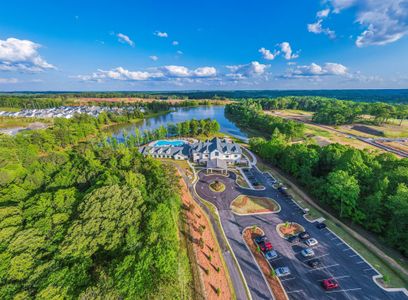
Master planned communities in Georgia







Real estate in Georgia
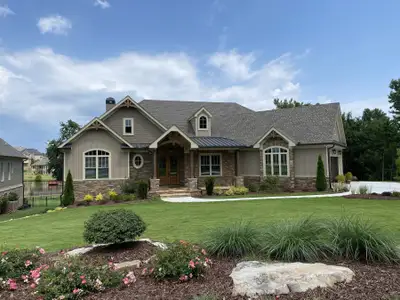
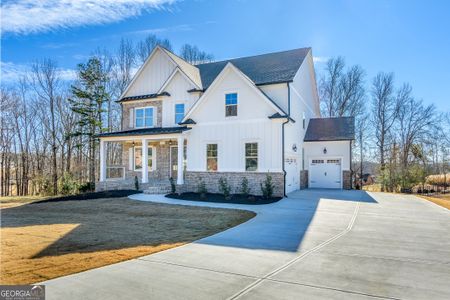
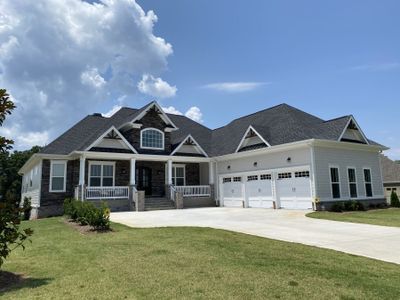
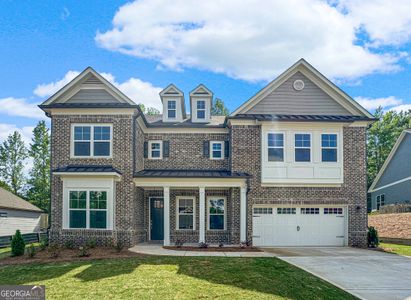
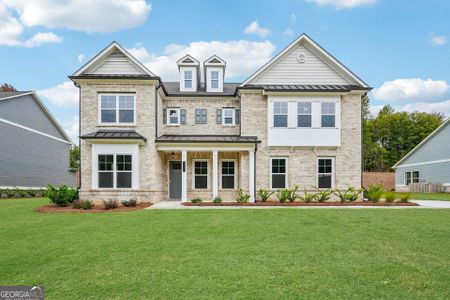
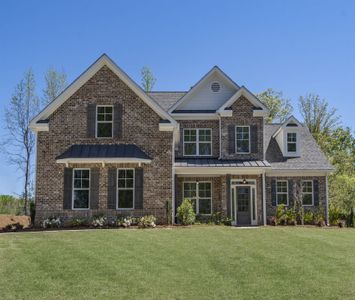
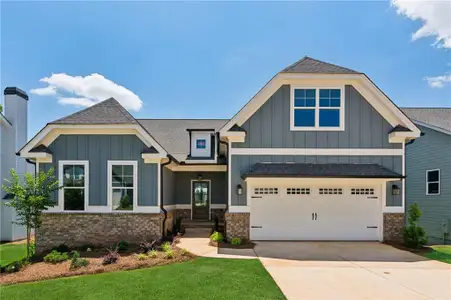
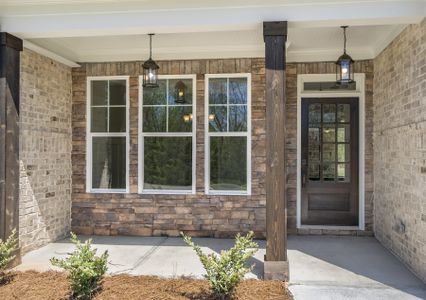
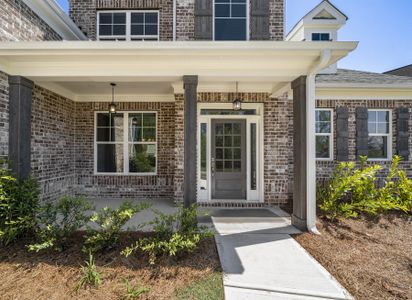
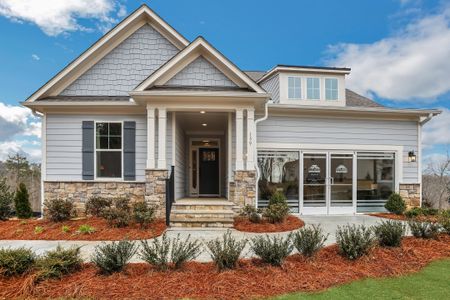
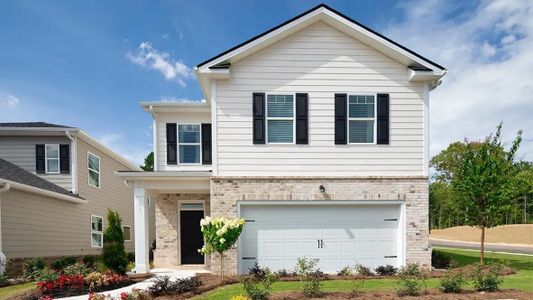
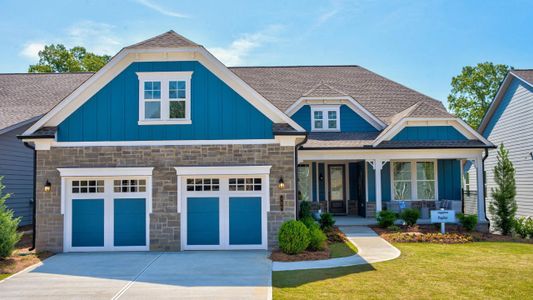
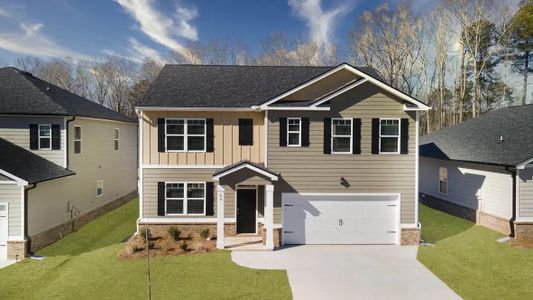
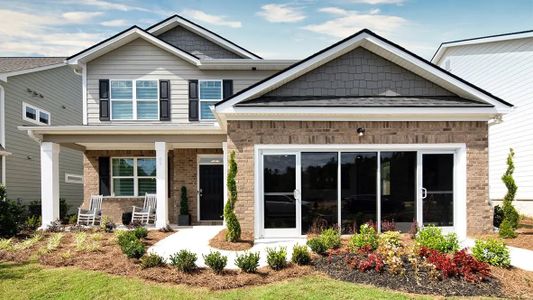
Homes in Georgia blend classic Southern charm with fresh, modern vibes. Cities like Savannah and Macon are known for their historic homes that tell stories of the past. Styles like Antebellum, Victorian, and Craftsman dominate the scene here, showcasing features like spacious front porches, impressive columns, and loads of intricate details. Meanwhile, if you're after a more modern vibe, Atlanta has got you covered. Here, you can find anything from sleek, sky-touching apartments to trendy townhomes, modern family homes, and even grand mansions that'll leave you in awe. If you're dreaming of owning your first home, Georgia is ready to lend a hand. The state has a special program, the Georgia Dream Homeownership Program, run by The Georgia Department of Community Affairs. The program is designed to help first-time homebuyers by offering loans at low-interest rates. Even better, it can provide up to $7,500 in down payment assistance if you meet the specific criteria. If you're interested, most lenders in Georgia can offer more details about this exciting opportunity.
Newly released communities

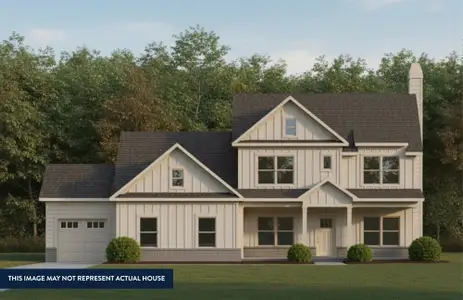


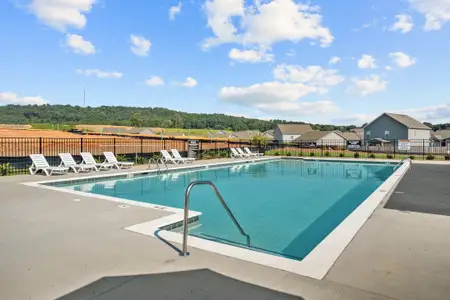
 Images coming soon
Hopewell Road
by Trademark Quality Homes, Forsyth, GA
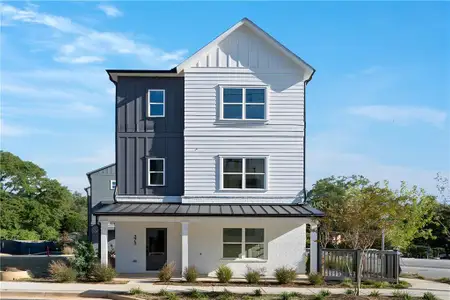 Images coming soon
Legacy Downs
by Windsong Properties, Canton, GA
Recently listed homes
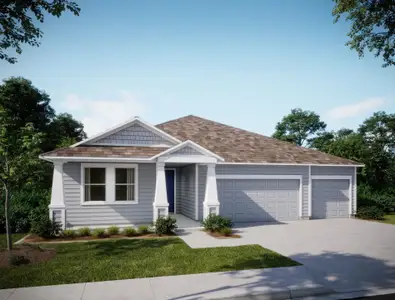
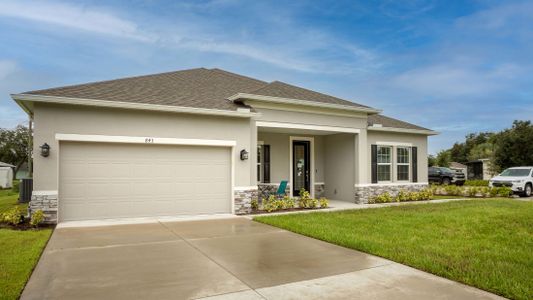

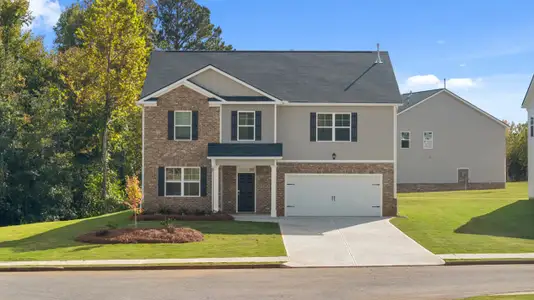
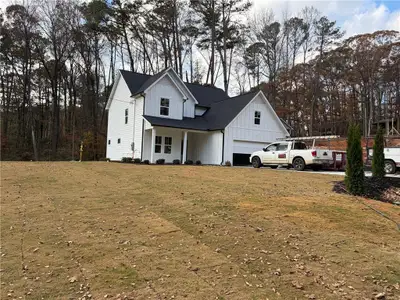

Recently published floor plans
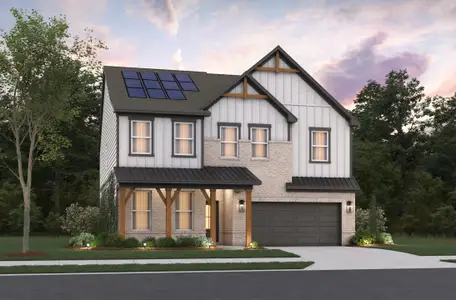
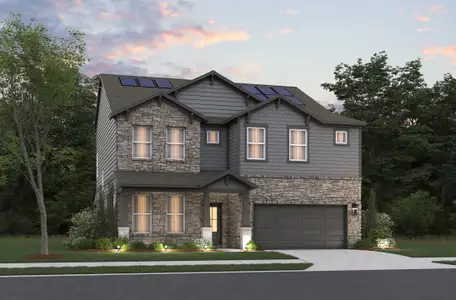
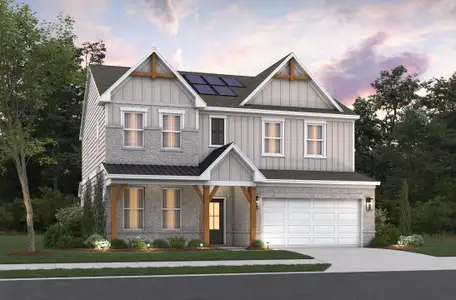
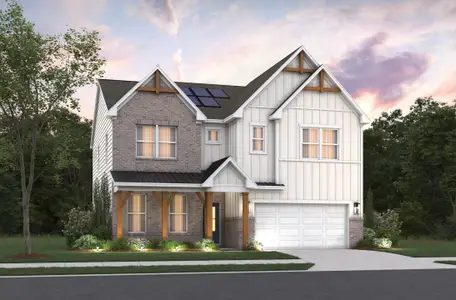
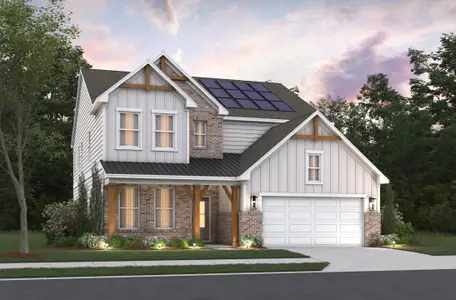
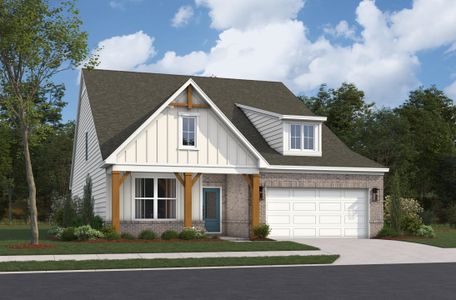
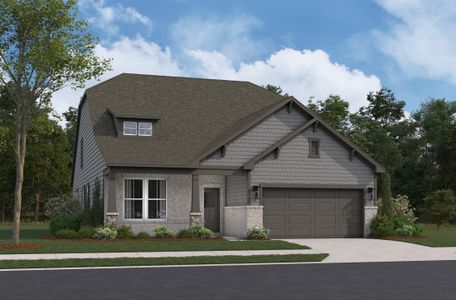
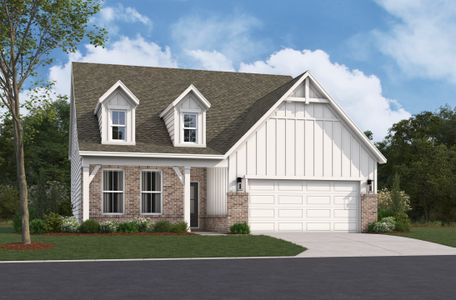
The most popular new construction builders in Georgia










Want to learn more about new construction?


Frequently asked questions
What is the current median sale price for a property in Georgia?
In the Georgia, the current median sale price stands at $436,592 as of December 2025. This figure is derived from an analysis of 10266 newly built properties, constructed by 194 local and national builders.
Who are the major developers of new construction homes in Georgia?
For those interested in new construction homes in Georgia, developers like D.R. Horton, Dream Finders Homes, Smith Douglas Homes, Adams Homes and Pulte Homes are the major contributors. Their projects span across several neighborhoods, offering a variety of styles and amenities.