
Atlanta Metropolitan Area new construction market: prices, trends, guides & homes as of December 2025

About Atlanta Metropolitan Area
Located in the southeastern region of the United States, Atlanta serves as the vibrant heart of Georgia. Known for its eclectic music and arts scene — from the resonating beats of rap and hip-hop to the captivating performances at the Fox Theatre — Atlanta stands as a cultural nexus among many ethnic groups. It is also steeped in profound history and is home to significant civil rights landmarks, including the historic site of Martin Luther King Jr's birth home. The economy is robust, housing corporate giants like Coca-Cola and Delta Air Lines and esteemed educational institutions such as Georgia Tech, Emory University, and numerous historically black colleges and universities (HBCUs. In addition, there are multiple enjoyable entertainment options for everyone of all ages. Some local favorites include the verdant spectra of Piedmont Park to the marine adventures in the Georgia Aquarium, one of the world's largest aquariums. Beyond Atlanta's lively core, surrounding suburbs offer serene escapes from urban life. These areas captivate visitors with their quaint, small-town appeal and a plethora of outdoor activities, such as the scenic hiking trails found in the Chattahoochee River National Recreation Area.
How are new home prices changing in Atlanta, GA?
Home price data reflects current listings in Atlanta Metropolitan Area, Georgia, sourced from Jome and updated regularly
*Based on Jome markets

Get free consultation with Atlanta Metropolitan Area expert
Get a free, no-pressure consultation with our top Atlanta Metropolitan Area new-construction expert. They know every major builder, the best deals and incentives, and exactly what's happening in the local new-construction market.
Atlanta Metropolitan Area market overview
- Overall inventory7,664
- Single-family inventory6,010
- Townhouse inventory1,512
- Condo inventory110
- Multi-family inventory16
- Penthouse inventory0
- 1 bed inventory33
- 2 beds inventory274
- 3 beds inventory2,470
- 4+ beds inventory4,875
- Median home price$500,000
- Median sqft price$208.95
- Median 1 bed price$314,247
- Median 2 beds price$469,990
- Median 3 beds price$391,147
- Median 4+ beds price$575,000
- Min listing price$150,000
- Max listing price$13,850,000
- Min community price$204,990
- Max community price$5,945,000
Atlanta Metropolitan Area median price change
| Month | Median price | Change |
|---|---|---|
| March 2025 | $484,993 | - |
| April 2025 | $481,011 | -0.82% |
| May 2025 | $485,515 | +0.94% |
| June 2025 | $489,900 | +0.90% |
| July 2025 | $495,786 | +1.20% |
| August 2025 | $496,990 | +0.24% |
What are the most popular buyers' searches?
What it's like to live in Atlanta Metropolitan Area?
The Atlanta metro operates as the Southeast's undisputed capital and economic powerhouse, where the 29-county region with 6.1 million residents (nation's 9th-largest metro) has experienced explosive growth adding 1.2 million people since 2010 as Fortune 500 headquarters including Coca-Cola, Delta Air Lines, Home Depot, UPS, and 18 others create concentrated corporate employment, where Hartsfield-Jackson Atlanta International Airport functions as the world's busiest airport by passenger traffic (serving 107 million annually, Delta's primary hub) generating 63,000 direct airport jobs plus hundreds of thousands in logistics, distribution, and corporate headquarters attracted by global connectivity, where film and television production earned "Hollywood of the South" designation as tax incentives attracted Marvel Studios, Tyler Perry Studios, and countless productions creating 40,000 entertainment industry jobs, where technology sector growth in "Silicon Peach" attracted tech companies and startups discovering Atlanta's talent, diversity, and moderate costs relative to true tech hubs, where healthcare employment through Emory Healthcare, Grady Health, Northside Hospital, and major systems serves metro needs, where logistics and distribution companies attracted by central Southeast location and transportation infrastructure employ tens of thousands, where financial services including major banking operations create white-collar employment, where historically African American colleges and universities (Morehouse, Spelman, Clark Atlanta, Morris Brown) plus Georgia Tech, Georgia State, and Emory create educational concentration, and where this economic diversity, corporate headquarters density, and prosperity distinguish Atlanta as the Southeast's only truly major league metro competing nationally. However, this explosive growth has transformed Atlanta from affordable Southern alternative into an expensive market where appreciation of 50% to 75% from 2019 to 2024 in many submarkets has eliminated the affordability advantage that once attracted migration, where quality new construction ranges $400,000 to $700,000 in desirable suburban locations with premium intown areas ITP (Inside the Perimeter of I-285) commanding $650,000 to $3 million-plus, where median household income of $77,000 cannot afford median home price approaching $420,000 creating disconnect only explainable by corporate relocators and high-wage professionals bringing outside capital, where traffic congestion reaches legendary catastrophic levels making Los Angeles blush with I-85, I-75, I-20, and I-285 (the Perimeter) experiencing gridlock transforming 15-mile commutes into 90-minute nightmares, where Atlanta's sprawl extends 60+ miles from downtown in all directions creating 140-mile metro diameter where people commute two hours each way from affordable outer suburbs, where school district quality varies dramatically requiring families to navigate complex choices across multiple county systems with top districts commanding $150,000 to $300,000 premiums, where property taxes range 0.9% to 1.2% of assessed value varying by county creating $4,500 to $7,200 annual bills on $600,000 homes, where Georgia's graduated income tax up to 5.75% eliminates $2,875 to $14,375 annually for households earning $50,000 to $250,000, where property insurance costs remain moderate at $2,000 to $3,500 annually given distance from coast, and where the trade-offs involve accepting that Atlanta's corporate prosperity created unaffordable market where working-class faces exclusion, where traffic has become a daily torture destroying quality of life with commutes exceeding two hours becoming normalized, where sprawl has created environmental concerns and infrastructure challenges, where rapid growth has overwhelmed schools and services, where crime in certain city areas requires careful neighborhood selection, where summer heat and humidity create oppressive conditions, but where Atlanta offers unmatched corporate career opportunities in the Southeast, genuine big-city amenities including professional sports and cultural institutions, international diversity rare in Southern cities, moderate costs relative to New York or San Francisco headquarters cities, and the economic vitality that made Atlanta the capital of the New South where prosperity and dysfunction coexist in America's ultimate sprawling car-dependent boomtown.
Why corporate headquarters, Hartsfield-Jackson Airport, and economic diversity create Southeast's most powerful economy
Atlanta's economic foundation differs fundamentally from single-industry Southern metros—the concentration of Fortune 500 headquarters, world's busiest airport, diverse employment sectors, and centuries of positioning as Southeast regional capital created an economy generating over $400 billion annually and providing opportunities across industries unusual for Southern cities.
- Fortune 500 corporate headquarters concentration distinguishes Atlanta nationally. The Coca-Cola Company (global headquarters in Atlanta, employing 4,000-plus locally), Delta Air Lines (headquarters and primary hub, employing 33,000 in Atlanta metro), The Home Depot (headquarters in Cobb County, employing 2,000 at corporate plus retail throughout metro), UPS (headquarters, employing 9,000 in metro), Southern Company (utility holding company), Genuine Parts Company, Norfolk Southern, SunTrust/Truist (following BB&T merger), NCR Corporation, and 18 total Fortune 500 headquarters create concentrated corporate employment. These companies employ tens of thousands locally in corporate roles—executives earning $150,000 to millions, senior managers earning $120,000 to $250,000, corporate professionals earning $75,000 to $150,000, and entry-level corporate positions earning $50,000 to $75,000. The headquarters concentration creates ecosystem where professional services (law firms, accounting, consulting, marketing agencies) employ thousands more serving corporate clients. However, it also creates vulnerability—when companies relocate headquarters or downsize (as AT&T Mobility did following acquisition), thousands of high-wage jobs disappear affecting housing markets.
- Hartsfield-Jackson Atlanta International Airport functions as the world's busiest by passenger traffic serving 107 million annually, Delta Air Lines' primary hub with 1,000+ daily departures, and critical connecting point for domestic and international travel. The airport employs approximately 63,000 directly including Delta employees (33,000 including pilots, flight attendants, mechanics, ground crews, operations), airport authority, TSA, customs, concessions, ground services, cargo operations, and airlines. However, many airport positions pay $35,000 to $65,000—solid working-class wages struggling with Atlanta's appreciated housing. The airport's global connectivity makes Atlanta attractive for corporate headquarters requiring executive travel, positions metro as logistics hub, and creates identity as international gateway unusual for Southern cities.
- Film and television production emerged following Georgia's aggressive tax incentives attracting Hollywood productions. Tyler Perry Studios (330-acre facility, largest film studio in U.S.), Trilith Studios (formerly Pinewood Atlanta, Marvel Studios shoots Avengers and MCU films), EUE/Screen Gems Studios, and numerous productions employ approximately 40,000 in entertainment industry—camera operators, lighting technicians, set designers, makeup artists, production assistants, extras, and various positions paying $40,000 to $150,000 depending on roles and union status. Production activity creates boom-bust cycles—when major productions film (2-6 months), employment surges and hotels fill, then productions wrap and move elsewhere. However, the permanent studio infrastructure and continuing production pipeline created genuine industry cluster. The "Hollywood of the South" designation attracts young creative professionals though entertainment industry wages often cannot support Atlanta's housing costs.
- Technology sector growth as "Silicon Peach" attracted companies discovering Atlanta's talent (Georgia Tech engineering graduates), diversity, and costs running below Silicon Valley or Seattle. NCR relocated headquarters to Atlanta, Salesforce operates major office, Google has presence, Microsoft maintains operations, and hundreds of startups employ tech workers earning $80,000 to $170,000. However, Atlanta's tech sector remains far smaller than Austin, Research Triangle, or actual tech hubs—meaningful for diversification but not transformational employment yet. Tech workers face challenges as Atlanta tech salaries (lower than Bay Area) combined with Atlanta's appreciated housing create affordability pressures despite "affordable tech hub" narrative.
- Healthcare employment includes Emory Healthcare (employing 24,000 operating Emory University Hospital, multiple facilities, academic medical center), Grady Health System (Atlanta's safety-net hospital, Level I trauma center, employing 7,000), Northside Hospital (employing 10,000 across multiple facilities), WellStar Health System, Piedmont Healthcare, Children's Healthcare of Atlanta, and numerous providers totaling 150,000-plus metro-wide. Nurses earn $62,000 to $92,000—solid salaries struggling with housing starting at $380,000 in affordable suburbs. Physicians earn $190,000 to $480,000, finding that even high medical incomes strain to afford premium Buckhead, Brookhaven, or desirable intown ITP neighborhoods where homes exceed $850,000-plus.
- Logistics and distribution companies attracted by central Southeast location, I-85/I-75/I-20 interstate convergence, and airport connectivity operate massive warehousing and fulfillment centers. Amazon operates multiple fulfillment centers employing thousands, UPS logistics hub, FedEx operations, and countless 3PLs serve the region. Positions pay $38,000 to $80,000 depending on roles—warehouse workers, truck drivers, logistics coordinators, operations managers—creating working-class to middle-class employment though many positions cannot support homeownership in Atlanta's current market.
- Financial services including SunTrust/Truist operations, regional banking centers, Invesco asset management, and various financial companies employ thousands in positions paying $60,000 to $180,000, though Atlanta's financial sector remains smaller than Charlotte's banking dominance.
- Higher education through Georgia Institute of Technology (Georgia Tech—15,000 students, top engineering/technology programs), Georgia State University (downtown, 36,000 students), Emory University (private research university, 15,000 students), historically African American colleges including Morehouse College, Spelman College, Clark Atlanta University, and Morris Brown College (Atlanta University Center), and numerous other institutions employ tens of thousands faculty and staff creating educated workforce and research capacity. However, faculty salaries ($55,000 to $145,000 depending on rank and institution) struggle with Atlanta housing costs that appreciated faster than academic wages. The tax structure imposes Georgia's graduated income tax ranging from 1% on income up to $750 (single) to 5.75% on income over $7,000, with standard deductions creating effective rates around 4.5% to 5.5% for middle and upper-middle-income households. This creates tax liability of approximately $2,875 annually on $50,000 income, $5,750 on $100,000, $11,500 on $200,000. Property taxes vary dramatically by county: Fulton County (Atlanta proper, Buckhead, Sandy Springs, northern suburbs) runs approximately 1.05% to 1.20% of assessed value creating higher absolute taxes, DeKalb County (eastern suburbs including Decatur, Brookhaven) runs 1.10% to 1.25%, Cobb County (northwestern suburbs including Marietta, Smyrna) runs 0.95% to 1.10%, Gwinnett County (northeastern suburbs including Duluth, Lawrenceville, Buford) runs 0.95% to 1.10%, Cherokee County (far northern suburbs) runs 0.85% to 1.00%, and outlying counties range 0.80% to 1.05%. On a $550,000 home, annual property tax bills range approximately $4,400 in Cherokee County to $6,875 in DeKalb County. Georgia reassesses annually though limits increases, creating less dramatic jumps than North Carolina's 8-year cycle. Sales tax runs 7% to 8.9% across metro—among the nation's highest—with state collecting 4%, counties adding 2% to 3%, and special districts adding additional, creating combined burden particularly in Fulton County reaching 8.9%.
The cost of living has increased catastrophically particularly in ITP (Inside the Perimeter) areas and desirable suburbs. Quality new construction ranges $400,000 to $700,000 in desirable suburban locations including Alpharetta (northern Fulton County, corporate headquarters, affluent, top schools), Johns Creek (northeastern Fulton, affluent, top schools, international demographics), Roswell (northern Fulton, historic character, top schools), Marietta and East Cobb (northwestern Cobb County, established, top schools), Brookhaven (DeKalb County ITP, upscale, gentrifying), Decatur (DeKalb County ITP, progressive, walkable, top schools though expensive), Dunwoody (northern DeKalb, affluent), Gwinnett County suburbs (diverse, solid schools, more affordable), and various developments throughout sprawling metro. Premium ITP neighborhoods including Buckhead (Atlanta's wealthiest area, luxury shopping and dining), Virginia-Highland, Midtown Atlanta, Inman Park, Morningside, and exclusive enclaves command $650,000 to $3 million-plus. Downtown Atlanta condos range $280,000 to $1.5 million-plus. The appreciation has been explosive—50% to 75% from 2019 to 2024 in many suburbs, 60% to 90% in hot intown neighborhoods, 45% to 60% even in far outer suburbs. Homes selling for $290,000 in 2019 now require $480,000-plus. The ITP vs OTP (Outside the Perimeter) distinction defines Atlanta—ITP offers walkability, urban amenities, shorter commutes, and social cachet commanding premiums, while OTP provides more house for money, better schools in some counties, and suburban character at costs of longer commutes and car-dependent sprawl.
The climate delivers hot humid Southern conditions with genuine seasonality. Winters bring temperatures typically 38°F to 58°F with occasional hard freezes and rare snow events (perhaps 1 to 3 inches annually, some years none, occasional bigger events paralyze city lacking snow infrastructure). Spring brings beautiful weather, flowering dogwoods, and pollen creating allergies. Summer heat and humidity June through September create oppressive conditions with temperatures 88°F to 96°F and afternoon thunderstorms. Fall provides pleasant weather. Hurricane risk exists though Atlanta's inland location 250 miles from coast eliminates storm surge—weakened systems bring heavy rain and wind. Tornado risk exists with occasional outbreaks. Annual precipitation averages 50 inches.
Understanding Atlanta by buyer profile and corporate headquarters dynamics
Atlanta's corporate concentration, entertainment industry, explosive sprawl, and traffic nightmare create buyer profiles where corporate relocators dominate premium areas, working-class faces complete exclusion, and commute tolerance determines location choices.
For Fortune 500 Corporate Professionals: Delta, Coca-Cola, Home Depot, UPS, and corporate headquarters professionals represent Atlanta's highest-earning buyer segment. Corporate managers and executives earning $120,000 to $350,000-plus purchase homes from $550,000 to $2 million-plus in premium locations including Buckhead (Atlanta's wealthiest neighborhood, luxury condos and estates $850,000 to $5 million-plus), Brookhaven (upscale ITP suburb, $650,000 to $1.8 million), Vinings/Smyrna (west ITP/OTP border, convenient to corporate campuses, $550,000 to $1.5 million), Alpharetta and Johns Creek (northern suburbs, corporate headquarters proximity, top schools, $500,000 to $1.3 million), East Cobb (established affluent, $550,000 to $1.5 million), and Decatur (progressive ITP suburb, walkable, expensive despite small houses, $600,000 to $1.8 million). Entry-level corporate professionals and mid-level managers earning $65,000 to $110,000 struggle with desirable Atlanta locations, often purchasing in outer suburbs from $380,000 to $550,000 in Gwinnett County, Cherokee County, or far reaches accepting 60 to 90-minute commutes during peak traffic. Dual-income corporate households where both spouses work headquarters positions creating combined $180,000 to $400,000-plus represent Atlanta's wealthiest segment, purchasing premium properties and driving appreciation that made Atlanta unaffordable for everyone else.
For Corporate Relocators from Expensive Markets: Atlanta attracts massive corporate relocation as companies recruit nationwide and professionals discover opportunities. Relocators from New York, San Francisco, Chicago, Boston, and expensive metros—typically ages 28 to 55 earning $95,000 to $250,000-plus—bring housing budgets calibrated to departure markets where they experienced $950,000 for 1,000 square feet in Manhattan or $1.3 million starter homes in Bay Area, making Atlanta's $550,000 to $950,000 for 3,200 square foot suburban homes feel accessible despite representing double what locals paid five years earlier. They purchase throughout metro depending on priorities: ITP neighborhoods for urban walkability (Midtown, Virginia-Highland, Inman Park, $650,000 to $1.5 million), northern suburbs for top schools and corporate proximity (Alpharetta, Johns Creek, East Cobb, $500,000 to $1.2 million), or Decatur for progressive politics and walkability despite premium costs ($600,000 to $1.5 million). Corporate relocators drove appreciation—when thousands earning expensive-market salaries compete for housing, local teachers earning $48,000 or nurses earning $68,000 cannot compete.
For Film and Entertainment Industry Workers: Tyler Perry Studios, Trilith, and production crews create buyer demand though entertainment wages often struggle with Atlanta housing. Camera operators, technicians, and crew earning $50,000 to $95,000 purchase homes from $320,000 to $480,000 in areas including South Atlanta neighborhoods near Tyler Perry Studios, Fayetteville area near Trilith (southern suburbs), or outer suburbs accepting commutes. Production executives, directors, and high-earning entertainment professionals purchase in $550,000 to $1.2 million range in ITP neighborhoods or upscale suburbs. However, many entertainment workers rent given production work's transient nature—shoot locally 3 to 6 months then move to next production elsewhere—making homeownership less practical than other industries. The entertainment industry created Atlanta cachet but hasn't generated mass homebuyer demand proportional to employment given wage levels and work volatility.
For Tech Workers and "Silicon Peach" Professionals: Atlanta's emerging tech sector employs software engineers, developers, and tech professionals earning $85,000 to $165,000. These workers purchase homes from $420,000 to $750,000 depending on income levels and dual-income status. However, Atlanta tech workers face challenges—tech salaries run 25% to 40% below Bay Area while Atlanta housing appreciated to levels approaching or exceeding less-expensive tech hubs like Austin or Research Triangle, eliminating "affordable tech alternative" narrative. Remote workers maintaining Bay Area salaries fare better, purchasing $600,000 to $1.1 million homes finding costs still below Silicon Valley though Atlanta's traffic often makes them question location choices.
For Healthcare Professionals Serving Metro: Emory Healthcare, Grady, Northside, and various systems employ nurses, physicians, and medical staff. Nurses earning $62,000 to $92,000 face severe affordability challenges. Single-income nurse households struggle qualifying for homes starting at $380,000 in affordable suburbs 45+ minutes from hospitals. Dual-nurse households earning combined $130,000 to $180,000 purchase homes from $450,000 to $650,000 in various suburbs accepting lengthy commutes through traffic. Physicians earning $190,000 to $480,000 purchase homes from $580,000 to $1.8 million in locations including Buckhead, Brookhaven, Vinings, Alpharetta, East Cobb, or Decatur, finding that even high medical incomes strain to afford premium Atlanta locations. Healthcare workers often express frustration that Atlanta housing costs approach expensive medical markets despite Georgia compensation running below coastal academic medical centers.
For Families Navigating Complex School District Choices: School district quality varies dramatically across metro requiring complex navigation. Top suburban school districts including Fulton County schools in northern suburbs (Alpharetta, Johns Creek, Roswell—though Fulton County itself shows dramatic variation with South Fulton schools struggling while North Fulton excels), Cobb County schools in specific zones (East Cobb, Walton High School zone, specific elementaries rated 9-10/10), Forsyth County schools (northern exurbs, consistently strong though 45+ miles from Atlanta), Gwinnett County schools (varying quality with some excellent schools in specific zones, diverse demographics), and City of Decatur Schools (small independent district with excellent reputation though homes exceed $600,000-plus for modest properties) command enormous premiums where families pay $150,000 to $300,000 extra for homes in top elementary school attendance zones. Atlanta Public Schools (City of Atlanta) shows dramatic variation with some excellent magnet schools and charter schools requiring lottery applications plus specific neighborhood schools performing well, but other schools struggling, creating impossible navigation for families. Cherokee County and Forsyth County northern exurbs offer solid schools at more moderate costs ($420,000 to $600,000) but require commutes exceeding 90 minutes to downtown or midtown Atlanta employment during peak traffic. Price points range from $400,000 in solid outer suburban areas with decent schools to $750,000-plus in top zones. Families achieving homeownership in top school zones typically represent dual-income professional households earning $140,000 to $250,000—corporate employees, dual-income healthcare, tech workers, or business owners. Working-class and moderate middle-class families earning $80,000 to $120,000 face exclusion from top school zones.
For ITP (Inside the Perimeter) Lifestyle Buyers: Living ITP (inside I-285 perimeter loop) represents Atlanta lifestyle choice—urban walkability, shorter commutes, cultural amenities, restaurants, entertainment, and social cachet versus suburban sprawl OTP (Outside the Perimeter). ITP neighborhoods including Midtown Atlanta (high-rises, walkable, LGBT-friendly, arts district, $350,000 condos to $1.5 million), Virginia-Highland (historic bungalows, walkable, restaurants, $650,000 to $1.8 million), Inman Park (Victorian homes, hip, walkable, $700,000 to $2 million), Morningside (established, family-oriented ITP, $650,000 to $1.5 million), Grant Park (gentrifying, near Zoo Atlanta, $500,000 to $1.2 million), Old Fourth Ward (rapidly gentrifying, BeltLine access, $450,000 to $1.3 million), and Decatur (technically OTP but feels ITP, progressive, walkable, top schools, $600,000 to $1.8 million) attract professionals willing to pay premiums for urban lifestyle and avoiding soul-crushing traffic OTP residents endure. However, ITP living commands enormous premiums—$700,000 for 1,800 square foot bungalow ITP versus $550,000 for 3,200 square foot new construction OTP in Gwinnett County—creating trade-offs between lifestyle and space. Crime concerns in certain ITP neighborhoods require careful research. Many young professionals and childless couples choose ITP lifestyle, while families with children often flee OTP for schools and space as children reach school age.
For Traffic-Averse Buyers Choosing Locations by Commute: Atlanta's legendary catastrophic traffic determines location choices more than any other factor. Professionals working downtown or midtown face choices: live ITP paying premiums but maintaining 15 to 30-minute commutes, live in northern suburbs (Alpharetta, Roswell, Johns Creek) accepting 60 to 90-minute southbound commutes on GA-400 or I-85 during peak, live eastern suburbs (Gwinnett) accepting similar I-85 nightmares, live western suburbs dealing with I-75/I-285 gridlock, or live southern suburbs (Fayette County, Coweta County) where fewer people have discovered creating somewhat better traffic though still 50 to 75 minutes. Remote workers and professionals with flexible schedules find Atlanta more manageable avoiding peak commute times. Traffic has become so catastrophic that many professionals refuse positions requiring downtown or midtown commutes unless salaries justify ITP premium housing costs or they accept two-hour daily commutes as cost of affordable housing.
For Diverse International Buyers: Atlanta's international diversity (particularly significant Asian, Hispanic, and African immigrant populations) creates demand in specific areas. Johns Creek and Duluth (Gwinnett County) developed substantial Korean populations with Korean businesses, restaurants, and cultural centers, attracting Korean families purchasing $450,000 to $850,000 homes prioritizing community and schools. Doraville and Chamblee areas developed diverse Hispanic and Asian populations. Clarkston (eastern DeKalb) became refugee resettlement center with extraordinary diversity. International buyers from India, China, Nigeria, and elsewhere purchase throughout metro depending on income levels, with many concentrating in northern suburbs for schools and corporate employment.
The HBCU Graduate and African American Professional Segment in Atlanta: Atlanta's unparalleled status as a cultural capital for African Americans is deeply rooted in its concentration of Historically African American Colleges and Universities (HBCUs)—including Morehouse, Spelman, Clark Atlanta, and Morris Brown—combined with a substantial, established African American professional and educated middle class. This confluence creates unique market dynamics. For decades, African American professionals, entrepreneurs, and corporate executives have historically concentrated in specific areas like Southwest Atlanta neighborhoods, the Cascade area, and surrounding suburbs. However, current trends show that gentrification has introduced displacement as other professionals move into historically African American intown neighborhoods, significantly driving property appreciation.
For Retirees Discovering Atlanta Costs: Atlanta attracts modest retiree settlement though far less than Florida or coastal areas. Retirees bringing $350,000 to $600,000 from selling homes in expensive markets discover Atlanta's appreciation reduced affordability advantages. They purchase homes from $380,000 to $680,000 in various locations, often choosing northern suburbs (Alpharetta, Roswell), eastern suburbs (Gwinnett), or areas avoiding worst traffic. Georgia's income tax affects retirement income creating annual tax of approximately $2,875 on $50,000 retirement income, $5,750 on $100,000. Property taxes vary by county. Many retirees discover Atlanta's traffic, summer heat, and suburban sprawl less appealing than expected, with some relocating to mountains (North Georgia, North Carolina) or coast after several years.
For Service Workers, Teachers, and Working-Class Facing Exclusion: The hundreds of thousands of restaurant workers, retail employees, hotel staff, airport service workers, teachers (Atlanta Public Schools pays $38,000 to $56,000 for most teachers, suburbs similar), childcare workers, and working-class residents earning $32,000 to $68,000 annually face complete exclusion from homeownership anywhere in metro. Even dual-income working families earning combined $70,000 to $110,000 cannot qualify for homes starting at $360,000 in most affordable outer counties. Many service workers commute 60 to 120 minutes from far exurbs in Spalding, Henry, Rockdale, Newton, Barrow, Paulding, or outlying rural counties where housing somewhat more accessible though even these areas appreciated substantially. This represents Atlanta's fundamental crisis—people who staff restaurants, teach children, clean office buildings, and work airport cannot afford living anywhere near employment, creating workforce sustainability questions, traffic nightmares, and moral concerns about prosperity excluding working-class entirely.
For First-Time Buyers Facing Impossible Barriers: Atlanta's appreciation has eliminated first-time buyer access for local workers earning Atlanta wages. Townhomes start around $270,000 in far outer suburbs requiring $9,450 down with FHA loans. Starter single-family homes begin at $340,000 in distant locations requiring $11,900 down. Young professionals, healthcare workers, teachers, and working families earning $65,000 to $115,000 combined income cannot qualify given appreciation of 55% to 70% while incomes rose only 18% to 24%. Most delay homeownership indefinitely, relocate to more affordable Southeastern markets, or require family assistance.
The substantial costs beyond mortgage payments in sprawling expensive metro
Your actual monthly housing expense extends beyond principal and interest, with Georgia's income tax and varying property taxes creating meaningful costs.
- Property taxes vary dramatically: Fulton County (Atlanta, northern suburbs) 1.05% to 1.20% of assessed value, DeKalb County 1.10% to 1.25%, Cobb County 0.95% to 1.10%, Gwinnett County 0.95% to 1.10%, Cherokee County 0.85% to 1.00%. On a $550,000 home, annual bills range approximately $4,675 in Cherokee to $6,875 in DeKalb.
- State income tax: Georgia's graduated rate up to 5.75% creates tax liability approximately $2,875 annually on $50,000 income, $5,750 on $100,000, $11,500 on $200,000.
- Sales tax: 7% to 8.9% (Fulton County highest at 8.9%).
- Homeowner's insurance: Moderate costs given inland location. Annual premiums range $2,000 for newer suburban homes to $3,200 for older homes or higher coverage to $3,800 for specific situations. New construction typically runs $2,200 to $2,900 annually.
- Flood insurance: Affects properties near Chattahoochee River and creeks. FEMA zone properties pay $900 to $3,500 annually. Most properties don't require coverage.
- Utility costs: Georgia Power serves metro. Combined utility bills for older 2,500 square foot homes run $200 to $290 monthly peak summer. New construction runs 30% lower.
- HOA fees: $50 to $180 monthly in standard suburban communities to $300 to $700 monthly in upscale developments, ITP condos, or luxury communities. Combined costs—property taxes around $450 monthly, state income tax around $420 monthly for $110,000 household, insurance $210 to $290 monthly, HOA fees $80 to $220 monthly—create $1,160 to $1,680 monthly beyond principal and interest.
What new construction delivers in sprawling metro
New construction provides advantages though cannot overcome fundamental traffic and sprawl challenges.
- Modern floor plans: Corporate and professional buyers expect home offices, open concepts, quality finishes.
- Energy efficiency: Atlanta summers make efficient HVAC, insulation, Low-E windows valuable.
- Smart home technology: Professional buyers expect structured wiring, smart integration, security systems.
Construction timelines in hot market
For inventory homes, closings happen within 50 to 110 days. Permitting varies dramatically—Fulton and DeKalb Counties face capacity constraints, outlying counties move faster. For to-be-built homes, realistic expectations run 10 to 15 months given hot market capacity constraints.
Financing in corporate headquarters hub
Most builders offer incentives from $7,000 to $17,000 in closing cost credits.
On a $550,000 home with approximately $450 monthly property tax, $240 monthly insurance, total housing payment reaches approximately $4,200 monthly. This requires household income exceeding $150,000—explaining why working-class faces exclusion while corporate professionals dominate.
Why Atlanta-specialist representation matters critically
Atlanta's sprawl, traffic catastrophe, complex school navigation, and ITP vs OTP dynamics make specialized representation essential.
Independent buyer's agents help navigate which suburbs offer best value, evaluate realistic commute times accounting for Atlanta's legendary traffic gridlock, assess school districts across multiple county systems, understand ITP vs OTP lifestyle and cost trade-offs, identify gentrification patterns and crime concerns in intown areas, compare builder reputations, and ensure buyers—particularly relocators—understand Atlanta's realities: corporate headquarters create opportunity but explosive growth made housing unaffordable for locals, traffic is genuinely catastrophic destroying quality of life, ITP commands enormous premiums for urban lifestyle, school quality requires complex navigation across county lines, and working-class faces complete exclusion, while recognizing Atlanta offers unmatched Southeast corporate opportunities, big-city amenities, international diversity, and economic vitality in the capital of the New South where prosperity and dysfunction coexist in America's ultimate sprawling boomtown.
Where can I find new homes?
Browse currently available new construction homes, communities, and floor plans across the Atlanta Metropolitan Area. All listings are updated daily with the latest inventory from builders. Browse all communities & new homes in Atlanta Metropolitan Area
Top-rated new construction communities in Atlanta Metropolitan Area


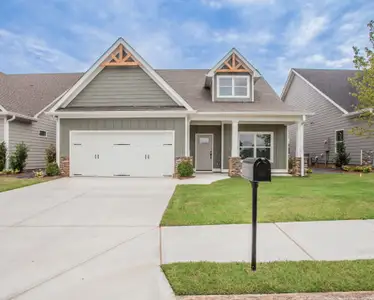
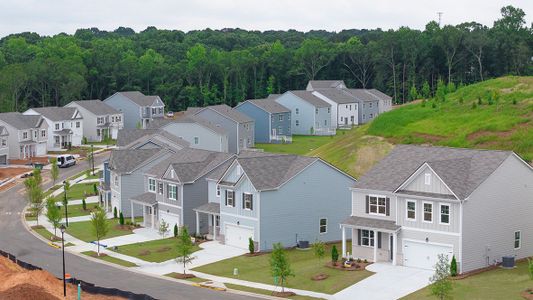

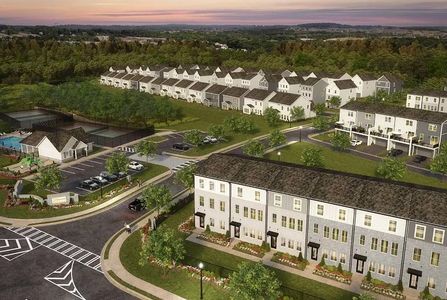

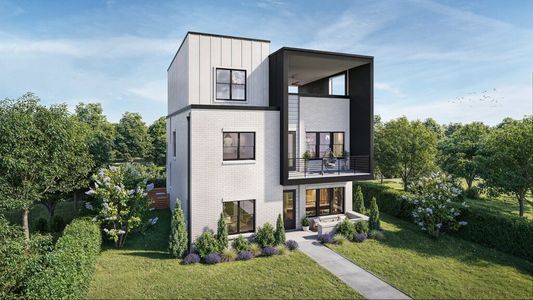
Master planned communities in Atlanta Metropolitan Area











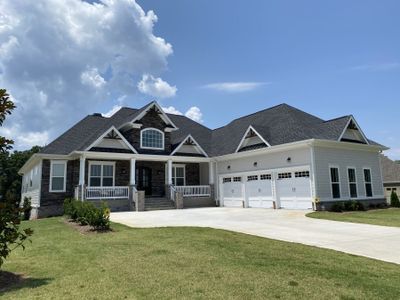
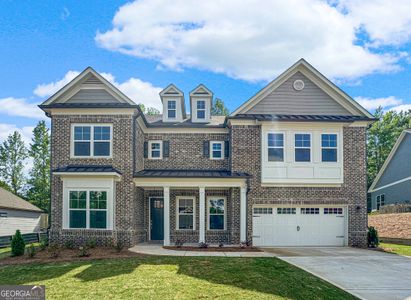
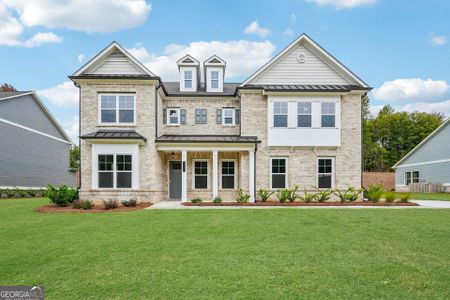

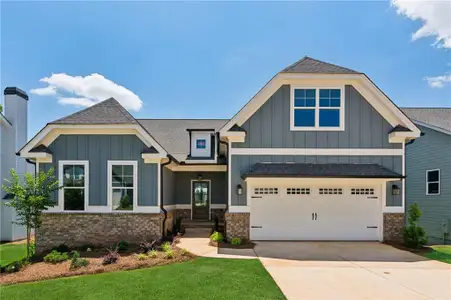

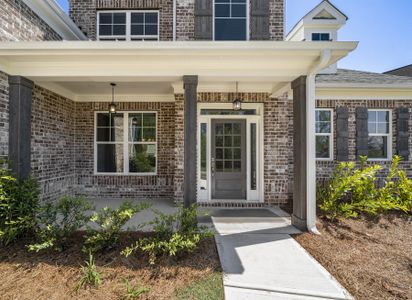





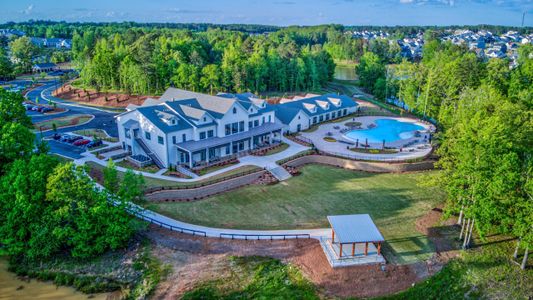








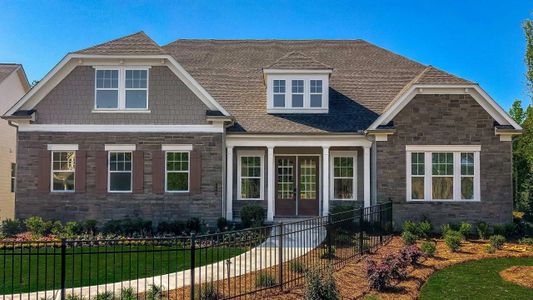

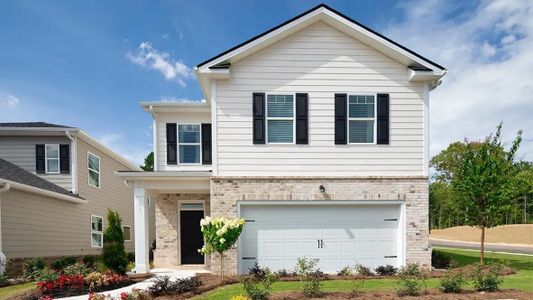
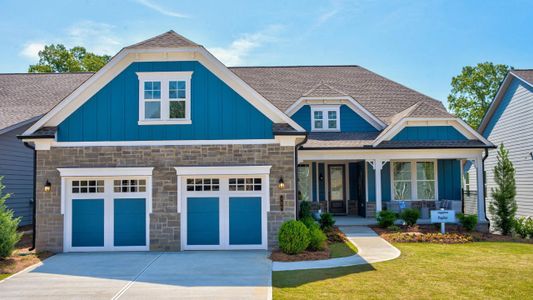
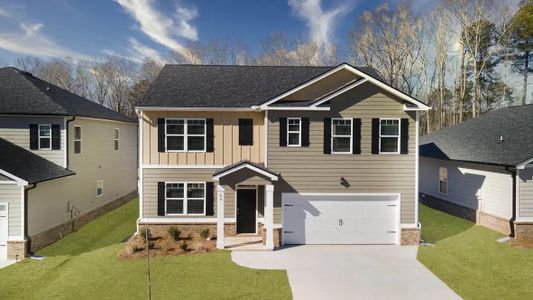
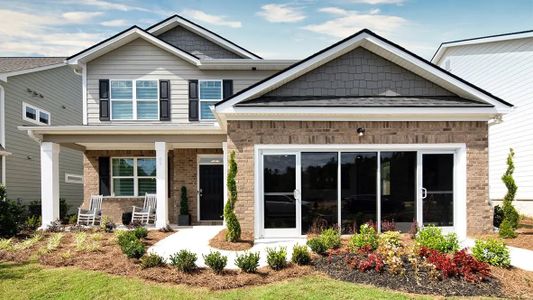
Browse communities & homes in Atlanta Metropolitan Area cities
Real estate in Atlanta Metropolitan Area
Atlanta's steady growth has cultivated a robust real estate environment. Real estate in Atlanta offers everything from affordable starter homes in emerging neighborhoods to luxurious estates in prestigious districts. Prospective homeowners have a wide collection of architectural styles, community amenities, and lifestyle choices to suit various tastes and budgets. Moreover, with new developments and revitalization projects continually underway, the Atlanta real estate market remains a hotbed of opportunities for both first-time buyers and seasoned investors. The city's commitment to growth and development ensures the real estate demand continues to flourish, adding to its appeal for those looking to purchase a home in the near future.
Newly released communities






 Images coming soon
Hopewell Road
by Trademark Quality Homes, Forsyth, GA
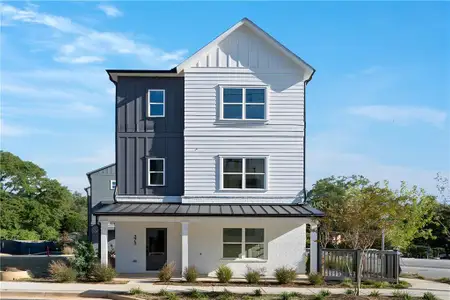 Images coming soon
Legacy Downs
by Windsong Properties, Canton, GA
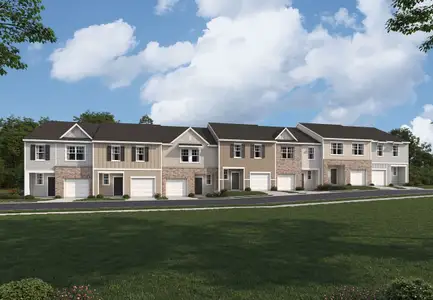

Recently listed homes

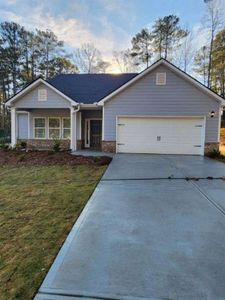
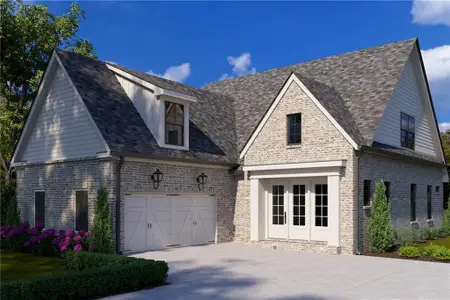
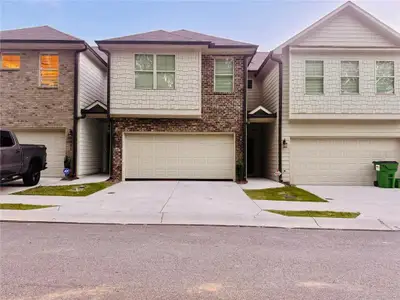
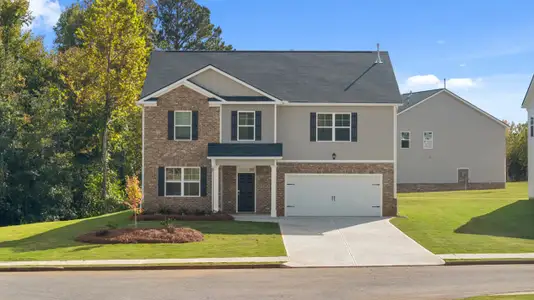

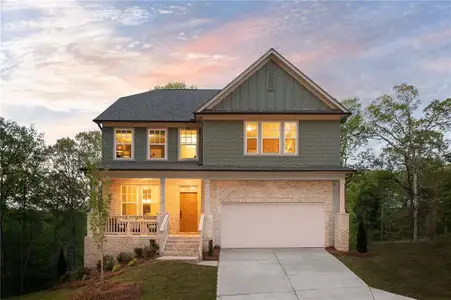
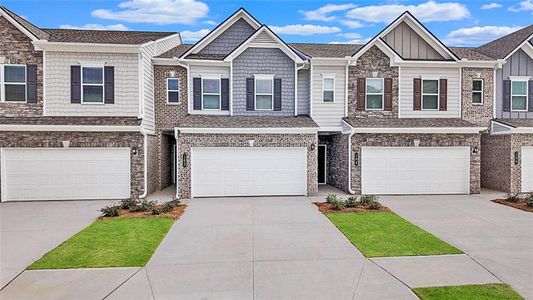
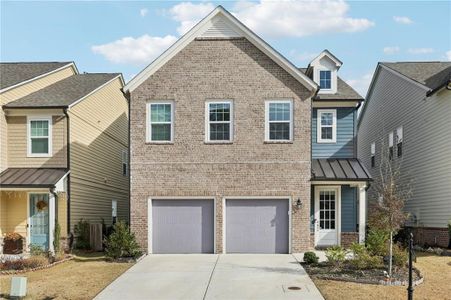

Recently published floor plans





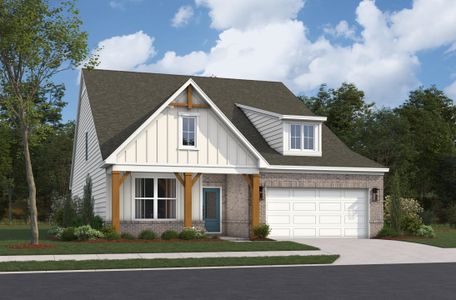
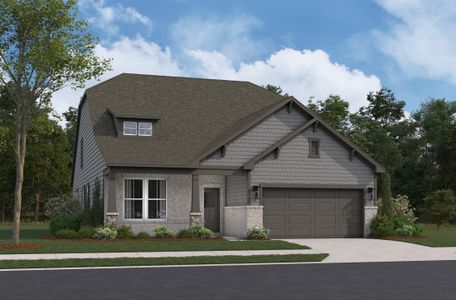
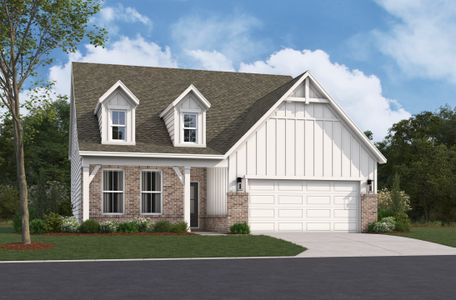
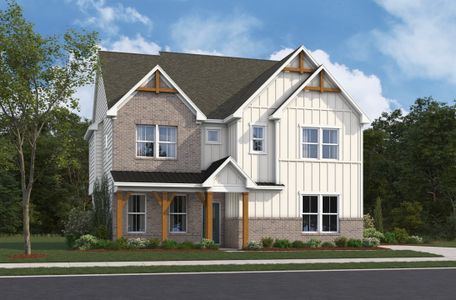
The most popular new construction builders in Atlanta Metropolitan Area










Read about new construction on Jome blog


Frequently asked questions
What is the current median sale price for a property in Atlanta Metropolitan Area?
For those looking to purchase property in Atlanta Metropolitan Area, the median sale price as of December 2025 is $499,990. This pricing reflects the current inventory of 7798 new construction homes by 180 different developers.
Who are the major developers of new construction homes in Atlanta Metropolitan Area?
The landscape of new construction homes in Atlanta Metropolitan Area, is shaped by major developers like D.R. Horton, DRB Homes, Dream Finders Homes, Pulte Homes and Smith Douglas Homes. They are known for their contributions to the city’s residential growth and diverse architectural styles.